Sustainability

Environment

Climate change and natural disasters are becoming increasingly prevalent, threatening business operations and resource allocation. To mitigate the impact of our operations and uphold our commitment to environmental protection, we take concrete actions to conserve energy and reduce our carbon footprint, promoting green building and renewable energy principles, and advocating a circular economy.

Sustainable Environment

Maximize resource efficiency and commit to recycled materials with minimal environmental impact

Learn more

Climate Change Governance

Understand climate risks and opportunities and move towards a low-carbon vision in response to the impacts of climate change and extreme weather

Learn more

Environmental Education

Uphold green living principles embodied by the Environmental Education Act

Learn more

Sustainable Environment

Energy and Resource Management

To address the risks and opportunities arising from climate change, CHC Group continues to enhance the management policy for energy and resources, which includes energy saving, waste reduction, and water conservation action plans, to ensure proper energy and resource allocation as well as to improve efficiency. CHC focuses on five aspects to establish management mechanisms and action plans: environmental protection and energy saving for office buildings, green behavior within business sites, green building, engaging in renewable energy, and improving efficiency for water treatment. The Group focuses primarily on indirect emissions from purchased electricity (Scope 2) in its greenhouse gas emissions profile, making energy management a key component of its low-carbon transformation strategy. By utilizing digital tools to establish energy baselines and real-time monitoring systems, we optimize energy management and resource utilization. Furthermore, we integrate the lifecycle impacts of products into building design and operational planning, aiming to achieve dual goals of reducing energy consumption and greenhouse gas emissions.

CHC Group’s management strategies for energy and resources are as follows:

AspectManagement Strategy
Environmental Conservation and
Energy Efficiency in Office
Buildings
  • Implementing green procurement policies, transitioning to electrification of transportation, and adopting high-efficiency equipment
  • Smart monitoring and control and energy conservation diagnosis
  • Implementation of an energy efficiency improvement program for rental properties
  • Adjusting energy usage in underutilized spaces and during off-peak hours
Energy Conservation Initiatives at
Business Locations
  • Implementing green procurement policies, transitioning to electrification of transportation, and adopting high-efficiency equipment
  • Optimizing construction engineering efficiency through the use of BIM technology
  • Improving construction methods, optimizing construction processes and reducing energy consumption
  • Promoting the Energy Saving Site Office, implementing the Energy Management Platform, and introducing energy storage equipment
  • Adjusting energy usage in underutilized spaces and during off-peak hours
Green Buildings and Smart
Buildings
  • Energy-efficient building envelope design
  • Building energy efficiency assessment
  • Design of electric vehicle charging stations
Engagement in Renewable Energy
  • Recovery and Reuse of Biogas
  • Establishing solar and wind power generation systems and promoting biogas power generation projects
  • Investing in renewable energy projects
  • Increasing the use of renewable energy sources
Enhancing Water Resource
Treatment Efficiency
  • Improving the efficiency of wastewater and reclaimed water treatment
  • Smart meter monitoring for real-time electricity usage
  • ISO 14001 Environmental Management System and ISO 50001 Energy Management System Certifications
  • Improving electricity management efficiency

Energy Management System and Implementation

CHC Group has established a systematic energy management framework tailored to the characteristics of each business unit and continuously implements energy-saving measures, renewable energy applications, and smart energy monitoring to enhance overall energy-use efficiency and decarbonization performance.

Real Estate Development Business—Energy Management System

  • The Real Estate Development Business adopts Green Building Certification as its core strategy for product energy management. All development projects are required to obtain the Green Building Label, which encompasses nine key indicators across four major areas: ecology, energy conservation, waste reduction, and health. Among these, daily energy savings is a key indicator. Energy-saving design concepts are integrated from the architectural planning and design stages. Multiple energy-saving measures are implemented based on the environmental characteristics of each project site. These measures include the use of insulated double-glazed glass to reduce heat and ultraviolet rays, enhancing indoor comfort and energy efficiency; high-performance air conditioning systems; energy-efficient lighting; variable frequency pumps and ventilation equipment; as well as solar energy installations to reduce energy consumption and carbon emissions.
  • Implementation: In 2024, representative projects such as Sensuous Garden, Belle Époque, and Green Utopia all adopted multiple energy-saving designs. Additionally, the Dazhi Commercial Building obtained the Level 1 Candidate Certificate for Building Energy Efficiency in 2024. Detailed results can be found in Section 3.2 of our Sustainability Report, Sustainable Design.

Environmental Project Development and Water Treatment Business—Energy Management System

  • Environmental Project Development and Water Treatment Business focuses on wastewater treatment and reclaimed water supply and has established an energy management system for its operating plants.  Measures include installing smart meters, prioritizing the procurement of energy-efficient equipment, and optimizing process management to continuously reduce electricity consumption. In terms of renewable energy, in addition to installing solar and wind power systems on rooftops, the business promote the anaerobic digestion of sludge to recover biogas for use as boiler fuel, thereby enhancing energy recycling efficiency.
  • Implementation: In 2024, multiple energy-saving measures were completed, and ongoing evaluations of innovative technologies such as biogas power generation were conducted to gradually increase the proportion of renewable energy usage. At the same time, the business actively implemented the ISO 50001:2018 Energy Management System, progressively implementing it across various operational plants with regular internal and external audits and training sessions. For details on implementation results and certification status, please refer to Section 5.2 Energy Management and the Appendix of our Sustainability Report.

Environmental Management System and Implementation

Based on the characteristics of each business unit, CHC Group has established a systematic environmental management system and continuously promotes pollution prevention, energy-saving decarbonization, circular economy, and green building initiatives to enhance overall environmental performance.

Real Estate Development Business—Environmental Management System

  • Real Estate Development Business adopts Green Building Certification as the core environmental management strategy, requiring all development projects to obtain Green Building Label. The certification covers four key areas—ecology, energy conservation, waste reduction, and health—across a total of nine indicators. Among these, “greening area” and “site water retention” are key indicators to ensure sustainability and quality throughout the development process.
  • Implementation: In 2024, representative projects such as Sensuous Garden, Tianjin Street, Prologue Eternal, Green Utopia, Poetic Yard, Metropolitan Village, and the Dazhi Commercial Building incorporated greening and water retention designs. Among these Sensuous Garden achieved the Gold-level Green Building Certification, while Tianjin Street and Green Utopia received Silver-level certification. The remaining projects are currently in the application phase. Through the use of vegetation, permeable pavements, and site water retention designs, these initiatives improve the urban microclimate, enhance biodiversity, and contribute to the beautification of public spaces, creating a safe and friendly green environment. Detailed results can be found in Section 3.2 of our Sustainability Report, Sustainable Design.

Environmental Project Development and Water Treatment Business—Environmental Management System

  • Environmental Project Development and Water Treatment Business places environmental sustainability at its core and has established a comprehensive environmental management system to ensure compliance with relevant regulations, including the Air Pollution Control Act, Water Pollution Control Act, Waste Disposal Act, Toxic and Concerned Chemical Substances Control Act, Climate Change Response Act, and Reclaimed Water Regulations. In addition, each project is progressively implementing the ISO 14001 Environmental Management System to enhance management efficiency through a systematic approach, supported by regular internal and external audits to continuously improve environmental performance.
  • Implementation: In 2024, the business completed odor detection, improved sludge treatment efficiency, promoted biogas reuse, enhanced the operational efficiency of large-scale equipment, and strengthened water resource recycling and reclaimed water production, continuously advancing environmental performance. The Company also actively launched the ISO 14001:2015 Environmental Management System and has progressively implemented it across various operational plants, with regular internal and external audits and training sessions. Certification details can be found in the Appendix of our Sustainability Report.

Raw Material Resource Management

CHC Group continues to strengthen raw material resource management, with a commitment to reducing reliance on and impact on natural resources. The strategies for managing raw material resources are as follows:

Management StrategyDescription
Statistical tracking of raw material use
  • Utilizing digital tools to manage raw material procurement, regularly tracking changes in the raw material market, and staying informed about emerging trends in building materials development, making adjustments as needed.
Promoting green procurement
  • Expanding the scope of application of green building materials in construction projects and increasing the proportion of green procurement.
Application and development of a circular
economy model
  • Building upon the practical experience of implementing BS 8001 Circular Economy in the social housing project at Nangang Depot Social Housing base, developing applications for circular economy initiatives.
Research and development of new construction
methods and optimization of operational models
  • Enhancing resource efficiency, reducing material wastage, and minimizing waste generation through innovative construction methods, operational model improvements, and service process enhancements.
Tracking and management of waste
  • The volume of various types of waste generated is analyzed, and all types of waste are carefully planned for reduction, sorting, reuse, and recycling measures. Waste disposal is entrusted to government registered waste management contractors, who handle waste disposal in accordance with the law and track its subsequent flow.
Reuse of water resources
  • Regularly monitor water usage behavior and water efficiency at each operational site; deepen expertise in water treatment and continuously enhance water treatment capabilities.

In addition to the above management strategies, CHC also pays close attention to global sustainable development issues. We are committed to using green building materials at a ratio higher than the statutory requirement and prioritizing the selection of residential equipment with energy-saving and environmental protection labels, so as to create a residential space that not only is friendly to the environment but also takes into account safety and comfort. For office equipment and supplies for daily operations, environmental and social considerations are also incorporated into procurement decisions to improve the Group’s green procurement effectiveness. For details on the Group’s management strategies and their implementation in 2024, please refer to Section 5.3 Circular Economy and Resource Management of the Sustainability Report.

Waste Management

CHC Group’s operating activities generate waste primarily consisting of construction waste, household waste, and organic sludge from wastewater treatment processes, all of which are 100% transported off-site for proper disposal and monitored in accordance with regulations. The Group is committed to reducing resource consumption at the source to minimize waste generation. We systematically classify waste, implement measures for reuse, recycling, and recovery, and engage government-registered contractors for proper disposal. In addition, the Group continues to refine sludge reduction technologies and regularly track the effectiveness of sludge reduction. Sludge is reduced through processes such as thickening, digestion, dewatering, and drying, with a target of a total reduction of 4,500 metric tons per year by 2027.

The waste management action plans for 2024 are as follows:

Action PlanDescription
Recycling and Reuse of Household Waste
  • Recycling PET bottles, aluminum cans, and paper, and quantifying the amounts to achieve resource reuse and reduce the total volume of waste
Recycling and Reuse of Scrap Materials
  • Requiring subcontractors to recycle and reuse construction scrap materials
  • Collecting and centrally managing scrap rebar materials
Increasing the Number of Times of
Formwork Usage
  • Using system formwork to increase reuse cycles
Recycling and Reuse of Sludge Waste
  • Sludge is used as low-strength concrete and artificial aggregates for drainage channel projects and wave dissipating blocks after proper treatment
  • Sludge is made into lightweight granular materials and brick and tile construction materials for landscape engineering

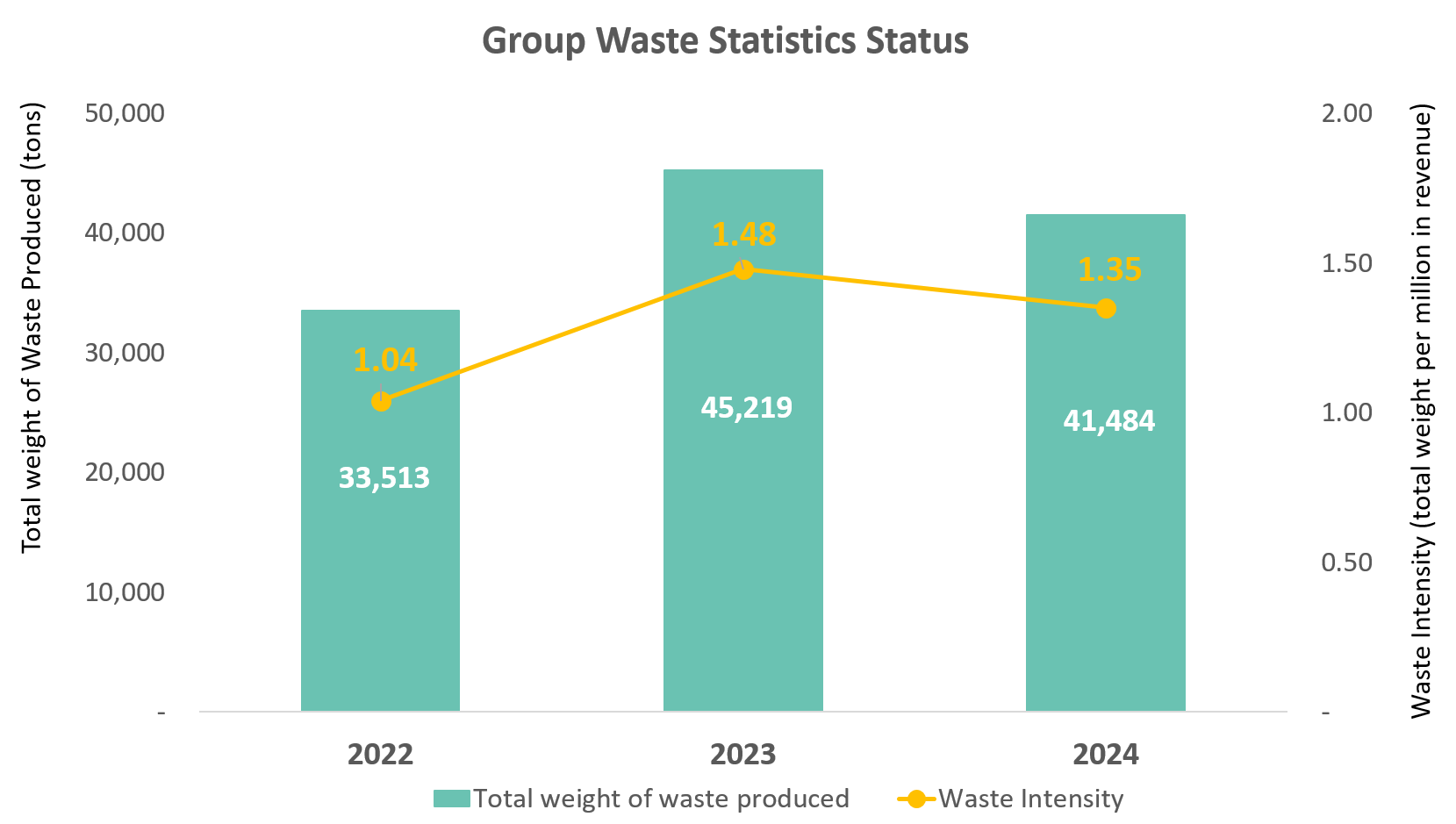
In 2024, the Group’s total waste amounted to 41,484.32 metric tons, with a waste intensity of 1.35 metric tons per million NTD of revenue, representing a decrease of approximately 9% from the previous year. With increased reuse of construction waste and the establishment of new sludge recycling channels, the recycling rate of waste rose from 24% in the previous year to 52%, demonstrating the gradually emerging benefits of resource circulation.

Note: The 2022-2024 waste inventory boundary includes the Group’s headquarters building, CEC’s construction sites, ongoing construction projects in CDC, HDEC’s operational bases, and construction sites.

In 2024, the Group achieved a total sludge reduction of 5,042.06 metric tons. The decrease of approximately 6% compared to the previous year was primarily due to equipment downtime for maintenance at the sludge treatment system of the Anping Water Resource Center. Other water resource centers all met their annual targets, resulting in an overall sludge reduction target achievement rate of 110% for the Group

Water Resource Management

CHC Group pays close attention to changes in the water environment. When utilizing water resources, we comprehensively consider relevant policies and regulations, environmental risks, and business needs, striving for effective scheduling and reasonable allocation. In addition, through the use of water-saving equipment, water supply regulation, reclaimed water recovery and reuse, and water conservation actions, we continue to enhance the efficiency of water resource utilization. In order to strengthen water resource management, the Group keeps records of water usage behavior, types of water sources, water consumption, and water discharge at each site. The water supply for the Group’s office locations and construction areas is provided by the Taiwan Water Corporation.
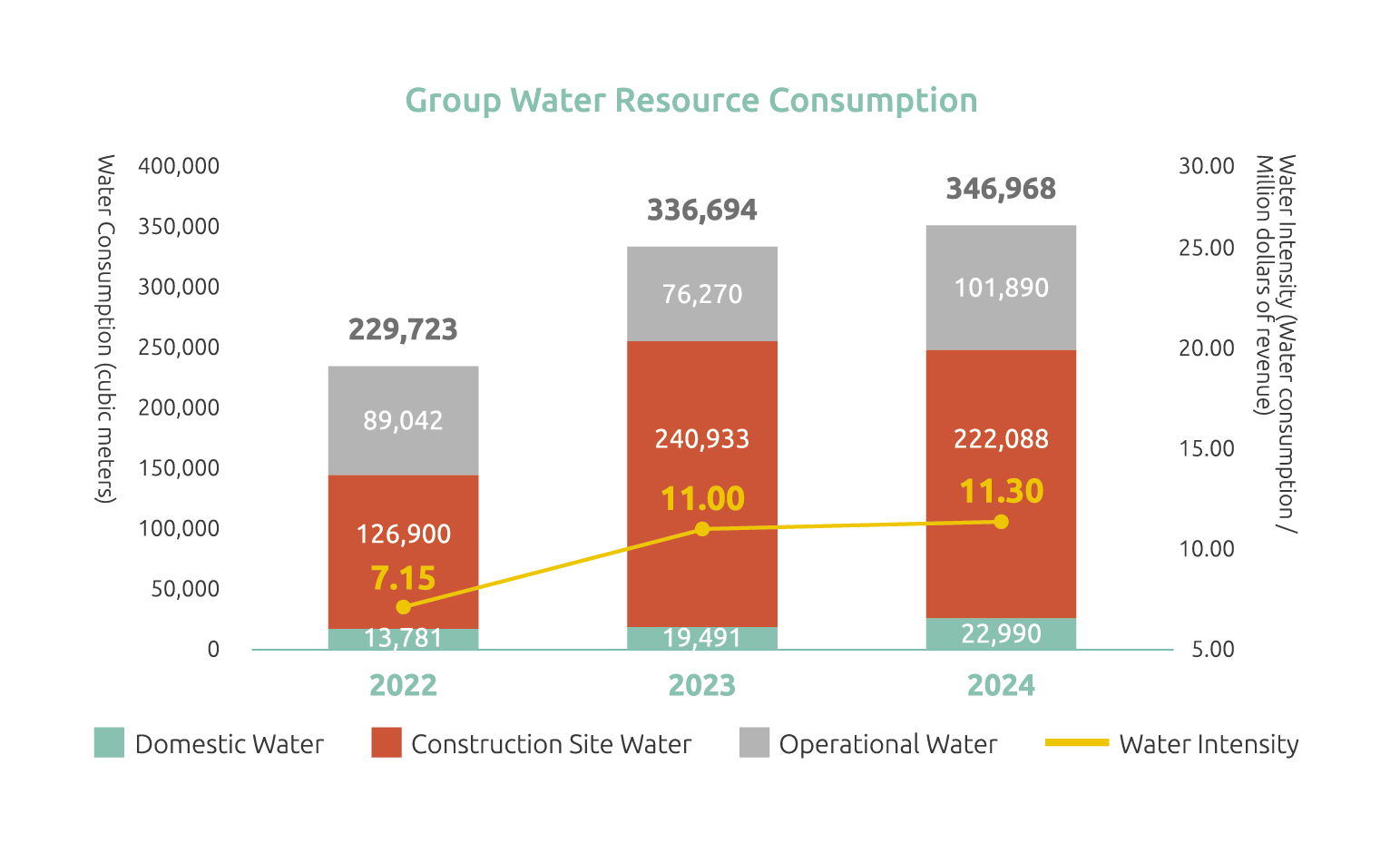
Note: The inventory boundary 2022 to 2024 includes the Group’s headquarters building, CEC’s construction sites, HDEC’s operational bases and construction sites.

In 2024, the Group’s total water consumption amounted to 346,968 cubic meters, with a water intensity of 11.30 cubic meters per million NTD in revenue. Approximately 60% was used for construction, while water treatment operations accounted for 29%.

CHC Group actively implements water resource recycling and reuse, applying reclaimed water to operational equipment use and cleaning, inflow water for reclaimed water treatment, water for wastewater treatment pools, environmental cleaning, wetland replenishment, and roadside tree irrigation, among other purposes. These measures not only reduce the Group’s own water consumption but also provide water for external uses such as washing, street cleaning or irrigating roadside trees. In 2024, all water resource centers of the Group, except for Anping and Linhai Water Resource Centers, achieved their targets for reclaimed water reuse, totaling 73,010,838 metric tons of reclaimed water. The reclaimed water rate reached 64%, an increase of about 10% from 2023, effectively enhancing water resource utilization efficiency.

In addition, the Group’s water conservation actions focus on both “source expansion” and “water saving.” The former includes the reuse of water from well points and the harvesting and utilization of rainwater; the latter encompasses the installation of water-saving devices and equipment, water conservation management, and adjustments to the water supply system. In 2024, the Group’s measurable water-saving actions resulted in a total reduction of 19,850 metric tons of water consumption.

Climate Change Governance

Climate Risk Management

In the face of the impacts of climate change and extreme weather, CHC Group incorporates the framework of Task Force on Climate-related Financial Disclosures (TCFD) into its continuous efforts to monitor and manage climate-related risks through four processes: identifying, assessing, verifying, and executing. The Group establishes a list of climate risks, formulates relevant management action plans, and draws up key indicators for measuring and managing climate-related risks and opportunities.

Cross-departmental workshops at all levels are held by CHC Group every year to not only investigate and analyze climate-related risks and opportunities, but also identify the impacts and time horizons of climate risks on the operations, strategies, and finances of CHC and its business sectors, including the level of impact, degree of vulnerability, and likelihood of occurrence. Taking into consideration other factors such as the business development strategies of the Group and the financial impacts on each business sector, a risk matrix is established as a basis for determining the priority of each risk and opportunity and for formulating response strategies and follow-up management action plans.

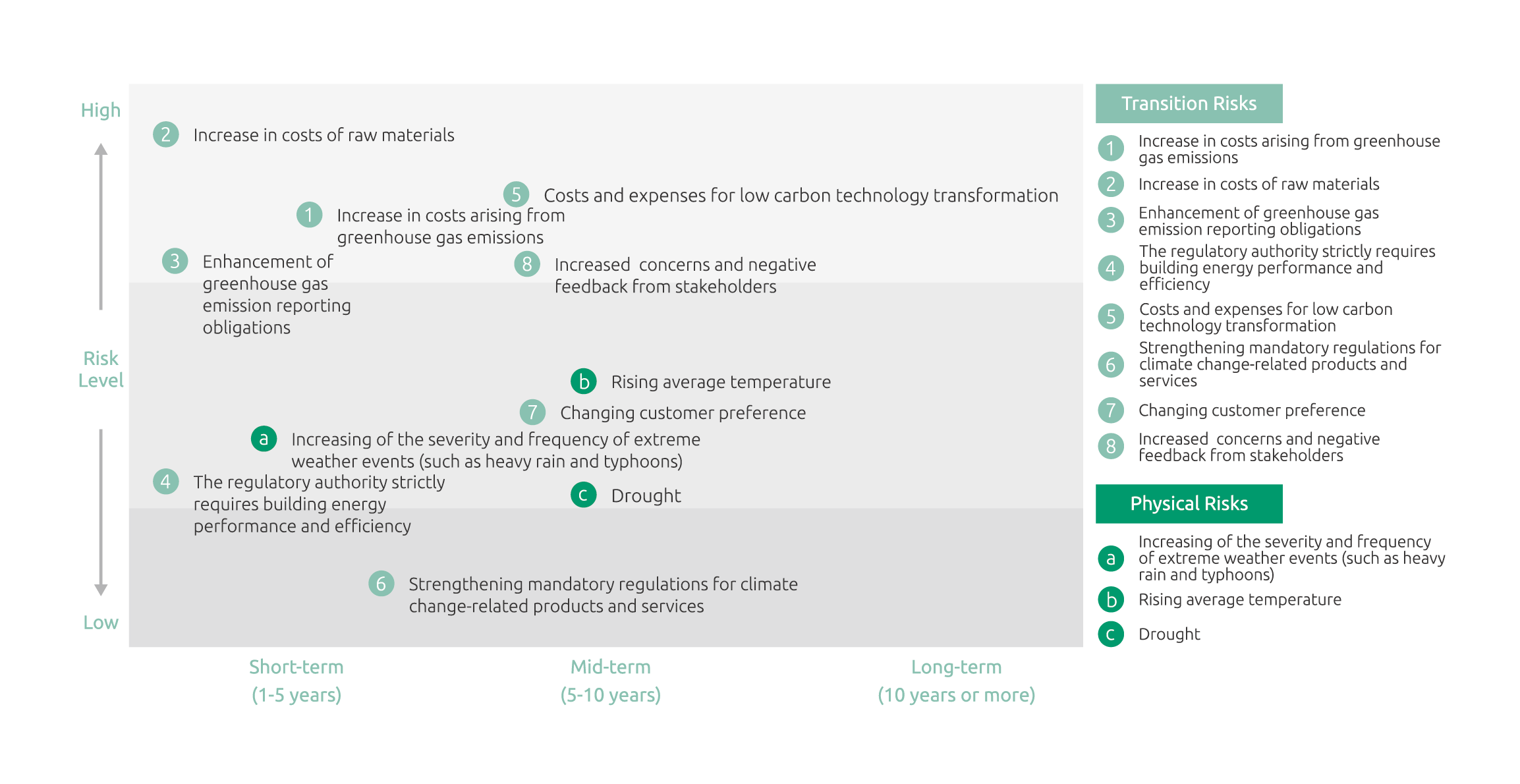
Based on the identification and assessment results, climate-related risks expected to have significant impacts on the Group in the short term (within 5 years) and medium term (5-10 years), including five transition risks and one physical risk. For major climate risks, CHC actively develops risk management action strategies for each business sector in terms of business strategies, business models, and contract mechanisms. Meanwhile, CHC also establishes relevant indicators and goals to strengthen the integration of climate issues and operational strategies to ensure effective control of climate-related risks.

Climate Risk Assessment Matrix

2024 Climate Risks and Opportunities, Financial Impact, and Management Strategy

TypeClimate-Related RisksFinancial ImpactManagement Strategy Opportunities
Transition RisksIncrease in costs of raw materials
  • Increase in operating costs
  • Improve research and advance planning related
    to raw material procurement, enhance raw
    material identification, management, and
    contingency plans, as well as optimize
    procurement and business strategies

  • Value engineering

Increase in costs arising from
GHG emissions


Costs and expenses for low
carbon technology
transformation


  • Increase in operating expenses
  • Increase in capital expenditures
  • Step up efforts to integrate technology into
    construction operations and develop digital
    tools, adjust product design and service
    models, as well as increase energy and
    resource utilization efficiency

  • Continue to develop products and service
    solutions in compliance with the principles of
    circular economy

  • Carry out R&D of innovative technologies and
    construction methods

  • Strengthen industry-government-academia
    collaboration to share technology, knowledge,
    and best practices

  • Value engineering
  • Workforce evolution
  • Increased use of
    reclaimed water and
    renewable energy

  • Development of new
    sustainable services and
    products

Enhancement of GHG emission
reporting obligations

  • Increase in operating expenses
  • Continue to carry out GHG inventories
    according to ISO 14064-1 and regularly
    disclose information on GHG emissions

  • Increase in stakeholders'
    positive feedback and
    recognition

  • Strengthen monitoring of
    climate and energy risks
    and enhance operational
    resilience

Concerns and negative feedback
from stakeholders

  • Decrease in operating revenues
  • Increase in costs of capital
  • Continue to integrate ESG issues into decision-
    making processes and business models to
    create sustainable value

  • Regularly disclose ESG management efforts
    and results, as well as reinforce communication
    and interaction with stakeholders on an
    ongoing basis

  • Enhance brand value and
    elevate company
    reputation

  • Increase stakeholders'
    positive feedback and
    recognition

  • Expansion of corporate
    influence

Physical RiskRising average temperatures
  • Decrease in operating revenues
  • Increase in operating costs
  • Increase in operating expenses
  • Continue to improve and implement heat
    hazard prevention measures and equipment
    investment, as well as enhance heat hazard
    awareness and response training among
    employees

  • Step up assessments of climate trends in CHC's
    operating locations and refine resource
    allocation and response planning

  • Bolster research on emerging building
    materials, as well as enhance performance
    verification and assessment

  • Design and construction
    of green buildings

  • Construction of resilient
    infrastructure

  • Increase use of reclaimed
    water and renewable
    energy

Metrics and Targets

The key indicators utilized by the Group to measure and manage climate-related risks and opportunities are listed below. For the short- to medium-term goals of these key indicators and their implementation status in 2024, please refer to chapters 1.3 Stakeholder Communication and Materiality Analysis and the corresponding chapters in the Sustainability Report.

IndicatorItems

Sustainability
Report Chapters

Design and Delivery of Sustainable
Products and Service

  • Green Building Design and Construction
  • Smart Building Design and Construction
  • Reclaimed Water Supply
  • Circular Economy

Chapter 3
Chapter 5

Construction Technologies and
Methods

  • Design and Construction Applications of BIM
  • Implementation of System Formwork
  • Circular Economy
  • Modular MEP
Material Selection and Use
  • Green Building Materials Usage
  • Green Procurement
Energy and Renewable Energy
  • Establishment, Monitoring, and Improvement of Energy
    Usage Benchmarks

  • Planning, Design, and Performance Verification of the Energy
    Saving Site Office

  • Introduction of Clean Energy and Energy Storage Equipment
  • Introduction to Energy Management Systems and Tools
  • Production and Utilization of Renewable Energy
Chapter 5
Waste
  • Waste Reduction, Classification, Recycling, and Reuse
  • Circular Economy
  • Implementation of Formwork System
Greenhouse Gas Management
  • ISO 14064-1/GHG Protocol Greenhouse Gas Inventory
  • Production and Utilization of Renewable Energy
  • Improvement of Energy Efficiency
  • Development of Carbon Management Tools

Water Resource Recovery and
Reuse

  • Reuse of Reclaimed Water from Wastewater Treatment Plants
  • Recovery Rate of Reclaimed Water System
Stakeholder Communication
  • Promotion of Communication and Collaboration with
    Stakeholders

Chapter 1

Greenhouse Gas Management

For corporate risks arising from global warming, CHC Group has taken prompt actions to incorporate climate issues into strategy formulation and management decision-making across all aspects of operations. In line with the industrial characteristics and business models of each business entity, the Group sets respective annual goals, formulates greenhouse gas management plans and ensures continuous management and improvement. The management strategies include, but are not limited to, establishing a mechanism for quantifying greenhouse gas emissions, researching carbon reduction solutions, investing in renewable energy development, and enhancing energy management efficiency.

In order to monitor greenhouse gas emissions and align with the “Sustainable Development Roadmap for Listed Companies,” the CHC Group plans to complete the boundary verification of consolidated financial statements in 2026. Starting from 2021, the Group has gradually implemented the ISO 14064-1:2018 greenhouse gas inventory standards in phases. By the end of 2024, the greenhouse gas inventory for 2023 of CHC (standalone), CCLC (standalone), CEC (standalone), CDC (standalone), and HDEC (consolidated) have been verified by Bureau Veritas Certification (BV) and obtained the ISO 14064-1:2018 greenhouse gas verification statement. In the first quarter of 2025, the greenhouse gas verification for 2024 of CHC (standalone) and CCLC (standalone) have been verified by Bureau Veritas Certification (BV), while the greenhouse gas emission data for 2024 of the other companies/locations within the Group is currently undergoing third-party verification.

CHC will continue to enhance its greenhouse gas emission management approaches and strengthen the carbon reduction policies and action plans of its business entities, in an effort to mitigate and adapt to the impacts of climate change as well as to achieve the goal of low carbon operations.

Greenhouse Gas Emissions

Aiming at proactively reducing greenhouse gas emissions, CHC Group regularly reviews the usage of various energy sources and the emission of greenhouse gases in order to have in-depth knowledge of the overall emission trends and energy efficiency and use them as a basis for the management of greenhouse gas emissions and development of action plans.

Scope 1 and Scope 2

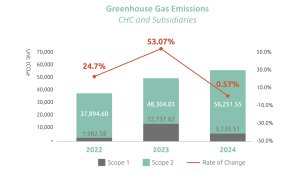
In 2024, the operational scale of the CHC Group continues to expand. The total greenhouse gas emissions for Scope 1 and Scope 2 amounted to 61,387.06 metric tons CO2e, representing an increase of 0.6% compared to the previous year. Combined Scope 1 and Scope 2 emissions in 2024 amounted to approximately 2 metric tons CO2e per million dollars of revenue, a 0.5% increase from 1.99 metric tons CO2e per million dollars in the previous year.

The total greenhouse gas emissions from Scope 1 and Scope 2 for CHC Group primarily arise from electricity consumption associated with water treatment processes. Consequently, electricity consumption per ton of wastewater treated and reclaimed water supplied has been established as a quantitative management indicator. Through energy-saving initiatives such as optimizing high-energy-consuming equipment, implementing smart energy management systems, and enhancing operational practices, we aim to enhance the efficiency of water resource treatment. In 2024, the electricity consumption per ton of wastewater treatment was 0.33 kWh, representing an 11% improvement over the established target. Additionally, electricity consumption per ton of reclaimed water supply was 1.33 kWh, also reflecting an 11% improvement over the established target.

Note: For detailed information regarding the determination of the inventory boundary and calculation for each scope in each year, please refer to chapter 5.1 Climate Change Governance in the Sustainability Report.

Scope 3

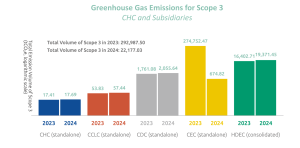
The Group conducted a comprehensive assessment of indirect greenhouse gas emissions in accordance with ISO 14064-1:2018. In recent years, companies included in the consolidated financial statements have been progressively assessed for materiality and the inventory of Scope 3 greenhouse gas emissions. For 2024, significant other indirect emission sources (Scope 3) were identified, including procurement of construction materials and sales services, upstream emissions from purchased energy sources, waste treatment services, and electricity consumption of downstream leased assets.

Note: For the boundaries, assurance information, and emissions by category of Scope 3 in 2023 and 2024, please refer to chapter 5.1 Climate Change Governance in the Sustainability Report.

Greenhouse Gas Emission Reduction Actions and Results

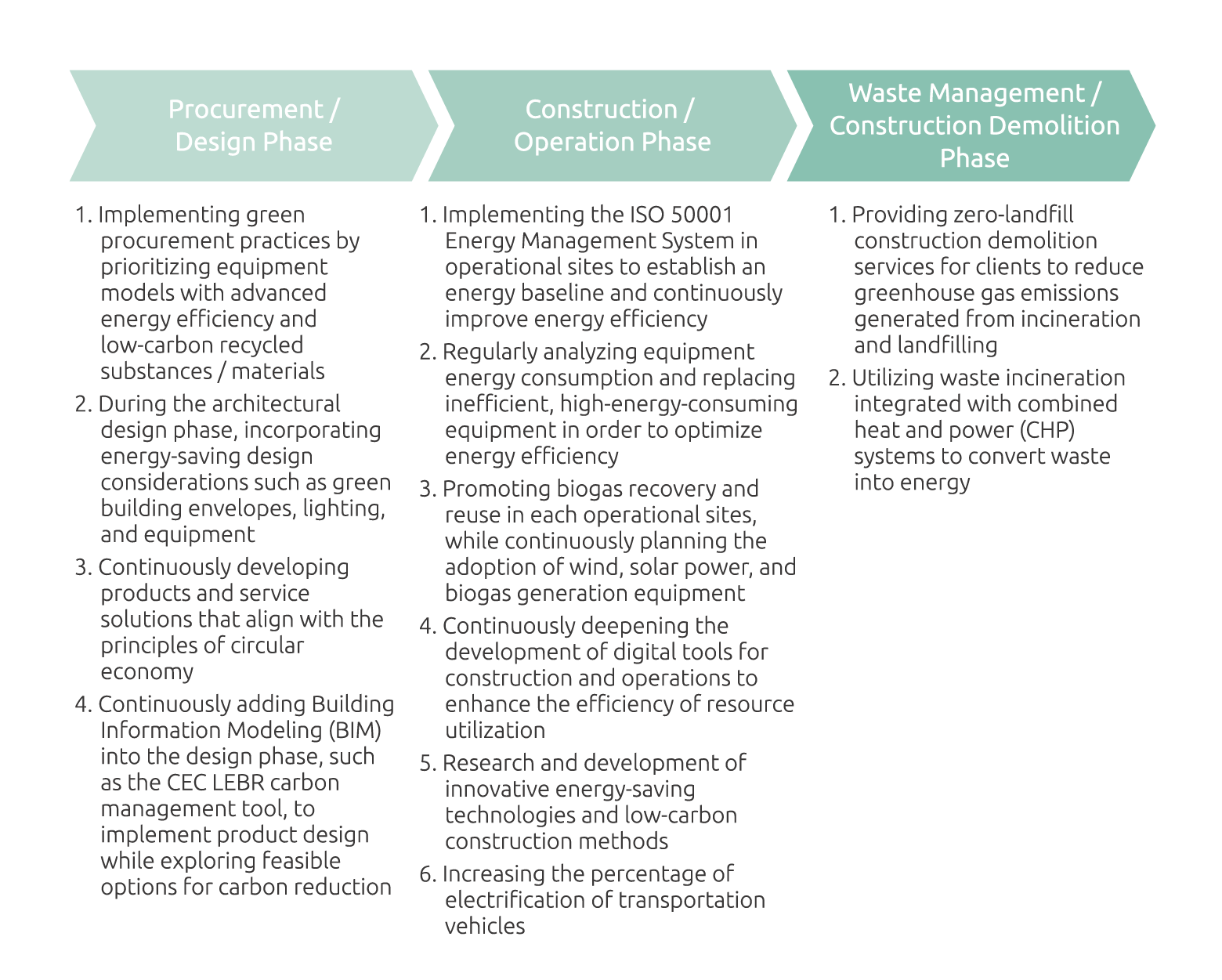
The CHC Group integrates the industrial characteristics and life cycle perspectives of each business entity (procurement/design phase, construction/operation phase, waste management/construction demolition phase) to establish corresponding decarbonization policies and action plans. These policies and plans are regularly reviewed and adjusted through a rolling process. The Group’s main GHG emission reduction strategies are as follows:

In 2024, the quantifiable greenhouse gas emission reduction achieved by the Group amounted to 1,115.36 metric tons of CO2e, showing a growth of 6.6% compared to the previous year’s 1,046.86 metric tons of CO2e. The most significant energy-saving effect was attributed to biogas recovery and reuse, followed by the solar power generation system. In the future, the Group will continue to advance the installation and use of renewable energy systems, with plans to introduce biogas power generation in 2025, thereby enhancing its greenhouse gas reduction initiatives.

CHC Group Greenhouse Gas Reduction Management Policy

CHC Group adheres to the core policy of “Actively Reducing Greenhouse Gas Emissions”, committing to gradually lowering emissions during operations through two main strategies: green electricity adoption and energy efficiency improvements, while ensuring compliance with international sustainability trends and regulatory requirements.

  • Short-term and 2030 Quantitative Targets: Using Continental Holdings Corporation, CHC (standalone), as the target boundary, the Company aims to reduce its operational emissions in 2026 by 1% compared to the baseline year of 2025. CHC (standalone) has set a goal to achieve 100% green electricity usage by 2030.
  • Strategies and Measures: 1. The primary strategy is to progressively increase the procurement and use of green electricity at the Group Headquarters building each year. Through reasonable planning of electricity consumption and budgeting, we ensure that while meeting power demands, reliance on fossil fuels is effectively reduced. 2. By implementing improvements in “Energy Efficiency in Equipment” and “Energy Efficiency in Management,” we continuously review electricity usage and enhance energy utilization efficiency, thereby promoting ongoing energy transition.
  • Achievement Status: The 2024 Headquarters building inventory and greenhouse gas reduction plan have been completed. Starting in 2026, the use of green electricity will commence and increase annually to meet the green electricity usage targets for each year.

Environmental Education

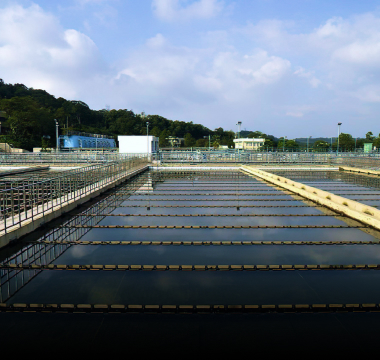
CHC Group centers its expertise on environmental project development and water treatment. Through the implementation of the “Act for Promotion of Private Participation in Infrastructure Projects (PPIP),” the Group has accumulated extensive experience spanning planning, design, construction, and operation and maintenance. We provide integrated water services, including reclaimed water and wastewater treatment. Our water resource centers continuously contribute to the sustainable development of Taiwan’s water resources and environmental protection. In addition, the Group actively promotes collaboration among industry, government, and academia. By sharing engineering experience and showcasing technology, we advance professional talent development. We also regularly organize related experiential activities, awareness campaigns, courses, and guided tours of our water resource centers to promote the importance of water resources.

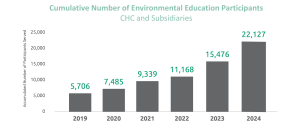
In 2024, a total of 180 environmental education activities were conducted, serving a total of 6,651 participants, which represents a significant increase of 54% compared to the previous year. Since 2019, these initiatives have reached a cumulative total of 22,127 individuals.

Water Resource (Recycle) Center

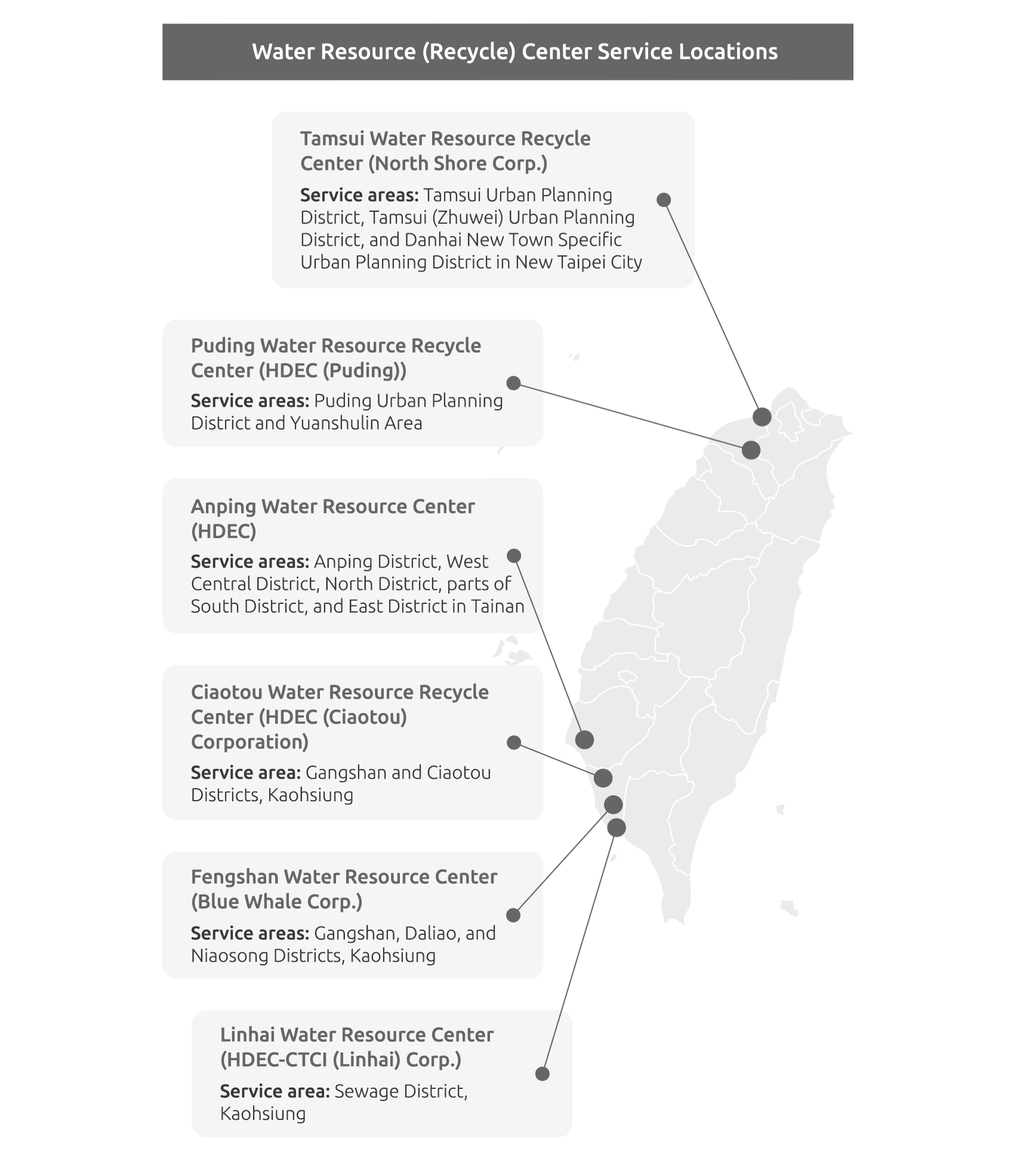
The Group operates six water resource (recycle) centers, which serve the following areas:

Tamsui Water Resource Recycle Center

The Tamsui Water Resource Recycle Center processes 56,000 tons of domestic wastewater daily, serving the Tamsui Urban Planning Division, Tamsui (Zhuwei) Urban Planning Division, and Danhai New Town Specific Urban Planning Division, with a total of 98,850 households. The center consistently and reliably treats wastewater into effluent exceeding regulatory water quality standards, creating a satisfying living environment and a riverside park for the public.

The Tamsui Water Resource Recycle Center has obtained the Green Building Silver Certification, meeting various green building indicators such as water conservation, energy efficiency, carbon reduction, and waste reduction. It has been continuously serving as a demonstration site for green buildings for many years. Since 2021, it has been certified as an environmental education facility, committed to maintaining the quality of environmental education programs. In 2024, it participated in the New Taipei City environmental education facility capacity enhancement program, consumer protection & green living seed personnel training, and engaged in training activities such as bird watching, SDGs innovation, and ESG governance to deepen the ESG knowledge among environmental education personnel. Furthermore, it collaborated with the Taiwan Environmental Information Association to conduct beach cleanup seed personnel training activities.

Puding Water Resource Recycle Center

The Puding Water Resource Recycle Center has a daily treatment capacity of 7,500 tons. The catchment area covers the urban planning area of Puding in Taoyuan City and the Yuanshulin area. As of the end of 2024, the length of the sewage pipeline network completed was 24.2 kilometers, serving 2,665 households. Upon completion of the second and third phases of expansion, the daily treatment capacity will reach 15,000 tons, significantly enhancing Taoyuan’s sewage treatment capacity.

The Puding Water Resource Recycle Center has obtained a Silver-level Green Building Candidate Certificate, and its surroundings feature a landscaped park equipped with a rainwater harvesting and reuse system. Since 2024, the Center has hosted guided tours and visits to promote the concept of water resource recycling, water-saving tips, and introduce wastewater treatment principles in an easily understandable manner. The Center continues to collaborate with schools and local associations to organize such activities and remains committed to environmental education. It aims to obtain certification as an environmental education facility by 2027.

Anping Water Resource Center

The Anping Water Resource Center is designed with a daily capacity of 160 thousand tons of wastewater treatment. Currently, an average of 117 thousand tons of domestic wastewater is properly treated every day and discharged into Anping Bay. It serves Anping District, West Central District, North, and parts of South and East District in Tainan City, totaling 126,086 households. The capacity for reclaimed water supply is 37,500 tons per day, providing water for advanced manufacturing processes of high-tech companies in the Tainan Science Park.

The Anping Water Resources Center obtained ISO 14001 Environmental Management System and the ISO 50001 Energy Management System certifications. The Environmental Education Center opened in July 2024, featuring a smart and green building design with a water-themed exterior incorporating mangrove conservation landscapes. It offers diverse facilities and green beautification landscapes, including a VR water droplet tour and various multimedia interactive facilities. An online exhibition hall for the Environmental Education Center was established for public visits anytime, anywhere. Throughout 2024, activities included environmental education course design and planning, guided tours, pre-planning for environmental education facility certification, and on-site inspections, with environmental education facility certification expected to be obtained in 2025.

Ciaotou Water Resource Recycle Center

The Ciaotou Water Resource Recycle Center, formerly the Gangshan Ciaotou Wastewater Treatment Plant, currently has a processing capacity of 20,000 tons per day. The catchment area includes Gangshan District and Ciaotou District in Kaohsiung City, with households sewage being treated in the sewage treatment system. In response to the severe water shortage crisis in southern Taiwan and the future water demand for high-tech industries, the Ciaotou Wastewater Reclamation Plant BTO project was initiated in 2023. Upon completion by the end of 2025, the wastewater treatment capacity will be increased from 20,000 tons to 50,000 tons, enabling the provision of 30,000 tons of reclaimed water daily to the TSMC Nanzih Plant. This will greatly alleviate water pressure and supply burden in the Greater Kaohsiung area.

In 2024, the main focus of the visit to the Ciaotou Water Resource Recycle Center was on the wastewater treatment process and the introduction of the construction plan and vision for the reclaimed water plant. The center will continue to develop related programs, upholding its commitment to promoting water resource environmental education and working towards becoming a certified environmental education facility in the future.

Fengshan Water Resource Center

The Fengshan Water Resource Center is one of the six wastewater treatment demonstration plants in Taiwan. It is capable of processing 109,600 tons of wastewater daily, with a maximum daily treatment capacity of 130,000 tons. It provides wastewater treatment services to a total of 108,614 households in the Fengshan, Daliao, and Niaosong Districts of Kaohsiung City, ensuring that the residents can enjoy a clean, odor-free Fengshan River waterfront. The Fengshan Water Resource Center is the first wastewater recycling BTO project to be operational. It provides 50,200 tons of reclaimed water to the Linhai Industrial Park every day, significantly enhancing the reliability and flexibility of water resource management. Additionally, by maintaining the effectiveness of ISO 14001 and ISO 50001 environmental and energy management system certifications, the Center strengthens the environmental impact and energy efficiency of its daily operations, contributing to the recycling and sustainable use of water resources in the country.

The Fengshan Water Resource Center is the first environmental education park in Taiwan with the theme of water resource circulation. Its landscape is surrounded by wetlands and river corridors, which creates a space where water resources, environment, and ecology can flourish together. Since obtaining certification as an environmental education facility in 2020, the Center has actively optimized it environmental education courses and strengthened personnel training. In 2024, the center received recognition as an outstanding unit in Assessment of Environmental Education Facilities and Venues organized by the Ministry of Environment.

Linhai Water Resource Center

Linhai Water Resource Center is the first demonstration project in Taiwan to simultaneously construct a sewage treatment plant and a reclaimed water treatment plant. It is also the second public sewage treatment and reuse BTO project in Kaohsiung City. The sewage from
the Kaisun Fourth Road trunk line in Qianzhen District is treated at the sewage treatment plant to share the processing load of the Kaohsiung sewage area. The Center can process 55,000 tons of sewage per day, providing 33,000 tons of reclaimed water to the Linhai Industrial Zone. This provides an affordable and stable industrial water source, while also serving as a detention basin and environmental education facility.

The Center’s main building achieved the Green Building Silver Certification and was honored with the Kaohsiung House Green Building Award. The Center has been certified as an environmental education facility since 2023. It features interactive exhibits covering on topics such as renewable energy, the current status of water resources in Taiwan, wastewater treatment processes, physical model displays, and the water cycle. In addition, the Center offers environmental education programs for school-age children and the general public, featuring static, dynamic, virtual, and hands-on learning experiences. As the recipient of the Golden Thumb Awards for PPP in 2023, the Linhai Water Resource Center continued to attract visits from government agencies and groups in 2024, sharing its achievements in ongoing optimization of sewage treatment and reclaimed water supply.